
On the River
thoughts on the mighty mississippi

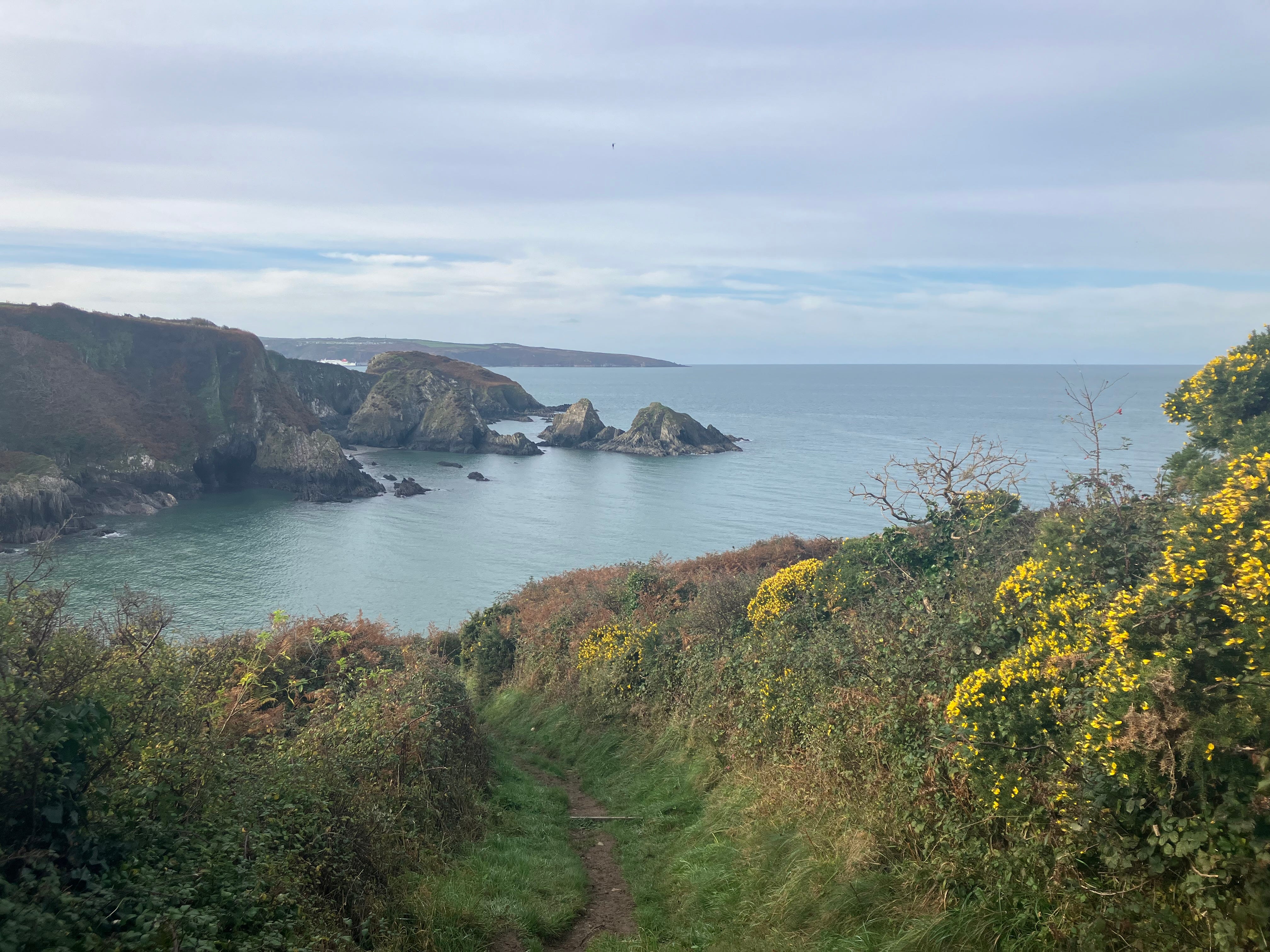
I asked a Welsh walking guide for advice on walking along the coast in Pembrokshire. His wise words were to keep the sea consistently on my left or my right and I wouldn’t get lost. He might’ve thought the advice was joking, but as someone who often gets lost, I took it seriously. Maybe that’s one of the reasons I love walking near the water - it’s hard to get lost walking around a lake or along a coastline.
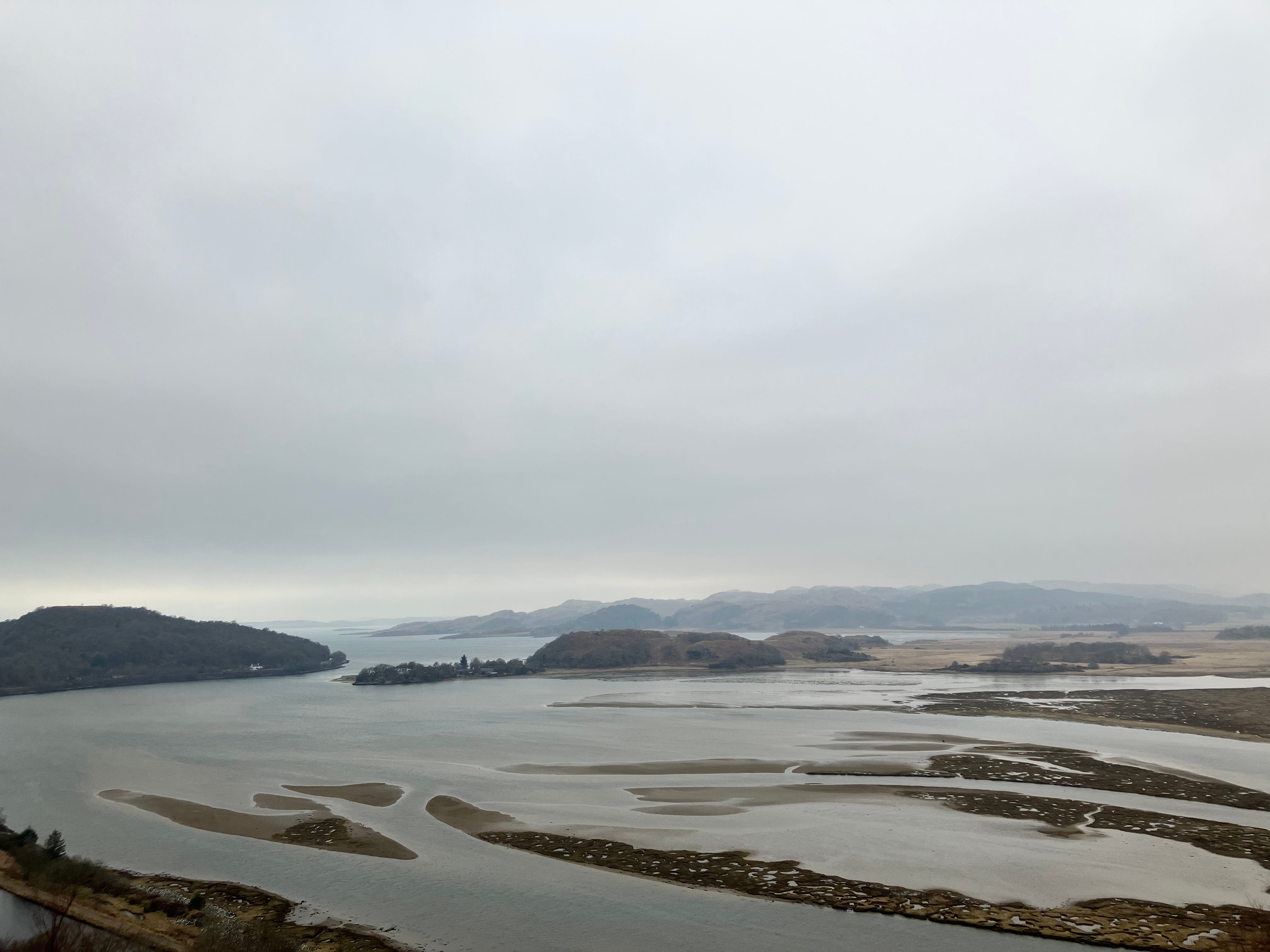
Rivers are my favorite waters to wander along. Maybe it’s the forward momentum of a river that compels me — it really goes somewhere. Often that somewhere is the ocean — the river splays out at the end as if trying (and utterly failing) to meet the ocean’s vastness. The murky edges between river and sea with their messy mudflats and marshes and strangely cut channels and little islands full of birds are magical liminal spaces and were some of my favorite walks in the UK.
Unfortunately we don’t really have a river in San Francisco. Well we used to have creeks and streams but most were buried or diverted and are now only remembered during flash floods, the water in search of its former home. We do have the Bay, which feels more like a weird brackish giant lake if anything. So I get my river fix when I go back to Minneapolis, where I was this past weekend, and I visit the Mississippi.
I feel as though I know the Mississippi so well — its bluffs and locks and dams and sand bars. But of course I hardly know it at all — my little patch of a few miles that I grew up next to is dwarfed by the over 2,300 miles of the length of the Mississippi.
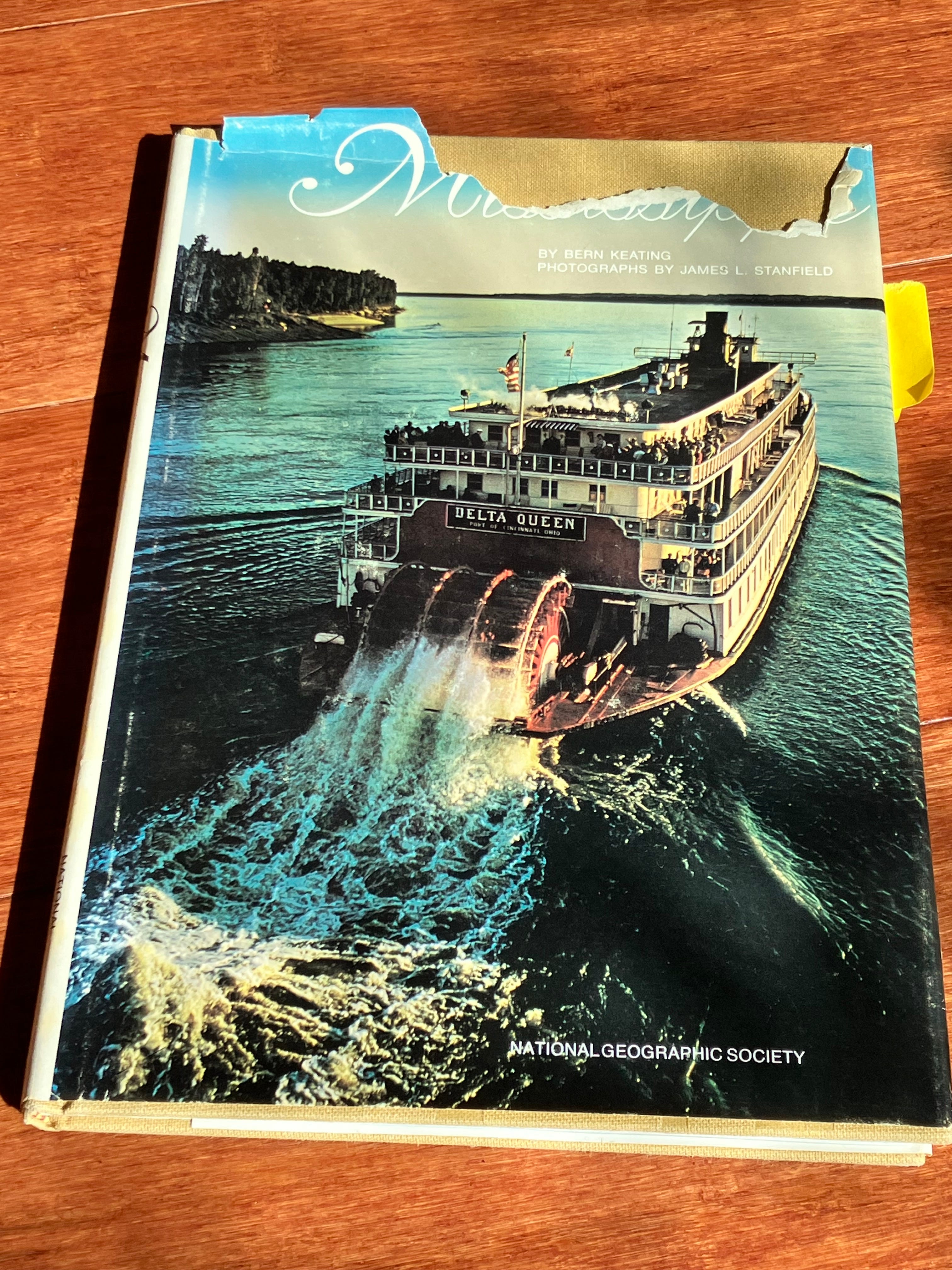
I found a National Geographic book from the 1970s at my mom’s house this weekend — The Mighty Mississippi — a meandering look at the history and geography and geology and groovy outfits of the people who live near this vast river. What was most striking was that all the problems the river faces today — floods, pollution, dwindling biodiversity, the negative impacts of the various Army Corps of Engineers projects — were problems people knew about in the 1970s. How astonishing that our species can identify problems so clearly and take so long to solve them.
Above all else, the Mississippi is a working river — it has been for centuries. I loved reading Life on the Mississippi as a kid — it was mind-blowing to think that the river I walked next to regularly could be so full of danger and drama; that skilled steamboat pilots would memorize every sandbar and branch and curve of the river.
Steamboats have been replaced by barges, which ship 500 million dollars in goods every year, including 60% of our country’s grain export. Returning the Mississippi River to a more natural state would make most of that shipping impossible and — according to shipping companies at least — result in drastically increased carbon emissions. According to one study, shipping by barge is more than four times as fuel efficient as shipping by truck. For now, we’ve decided to trade the environmental devastation of continuously dredging the river for the environmental benefit of decreased carbon emissions.
But not all of the river is dredged for shipping; the river isn’t navigable for commercial shipping north of St. Anthony Falls. The difference is noticeable. One day, we walked north of the Falls at Mississippi Gateway Regional Park in Brooklyn Park, a suburb north of Minneapolis. The park recently opened a new visitors center and treetop trail, so it was packed with families enjoying the last bit of summer. We walked along the treetop walkway, which was interspersed with play structures and slides. It looked out over a marsh and a forest that bordered the river. After circling the treetops, we walked down to the boardwalk on the marsh, spotting a few cattails (or nature’s corndogs, as my sister calls them). In the distance was the only human-made structure on this stretch of the Mississippi, the Coon Rapids Dam, which is only there to prevent invasive species from coming further up river. The river was untidy, rough around the edges. A bit wild.


The next day we walked south of the Falls on Raspberry Island, a small island in the Mississippi near downtown St. Paul. The river has a funny horseshoe bend here, dividing off a little chunk of St. Paul — including the infamous Wabasha Caves where gangsters used to hide out during the Prohibition era — from the rest of the city.
We parked on the south side of the horseshoe, near the town of West St. Paul which is actually south of the city of St. Paul but on the western bank of the Mississippi which, because of the horseshoe, runs east-west at this point and not north-south, so it’s really the south side of the river and it’s this kind of buffoonery that makes Minneapolitans feel superior, but I digress. We walked across a bridge, past houseboats and docks, and on to the island.
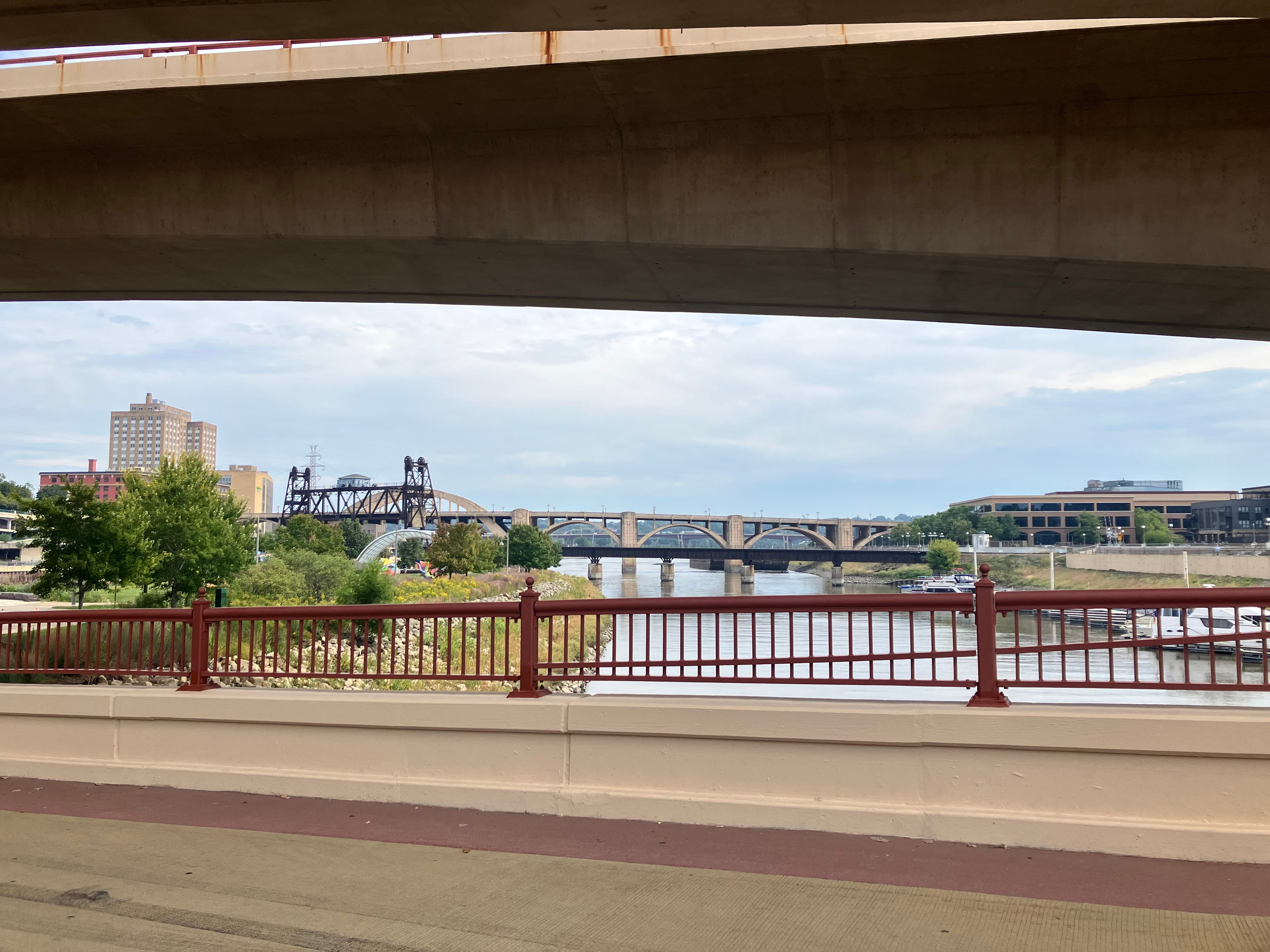
The setting felt so jumbled. We were low on the Mississippi looking up the hill on one side to downtown St. Paul. Along that bank ran a long freight train. Some sort of tugboat chugged down the river. We were surrounded by bridges on all sides and on the opposite bank rose shiny new apartment buildings. It all felt so industrious and commercial, the wildness of the river tamed to its Army Corps of Engineers channels. The island itself was a bit shaggier, with flowers and long grasses. Two young people practiced their Aztec dancing and drumming at the bandshell on the far side of the island. Scattered on one side of the island were giant Alebrije sculptures — fantastical, colorful creatures made out of papier-mâché. This whimsical Mexican folk art towering above us was a marked contrast to the muted riverstone and rusting metal around us.


Before I flew home, I visited my dad’s bench on yet another stretch of the river. The foliage was thick and green, with a few yellowing hints that fall is coming. The river was calm, the current almost imperceptible.
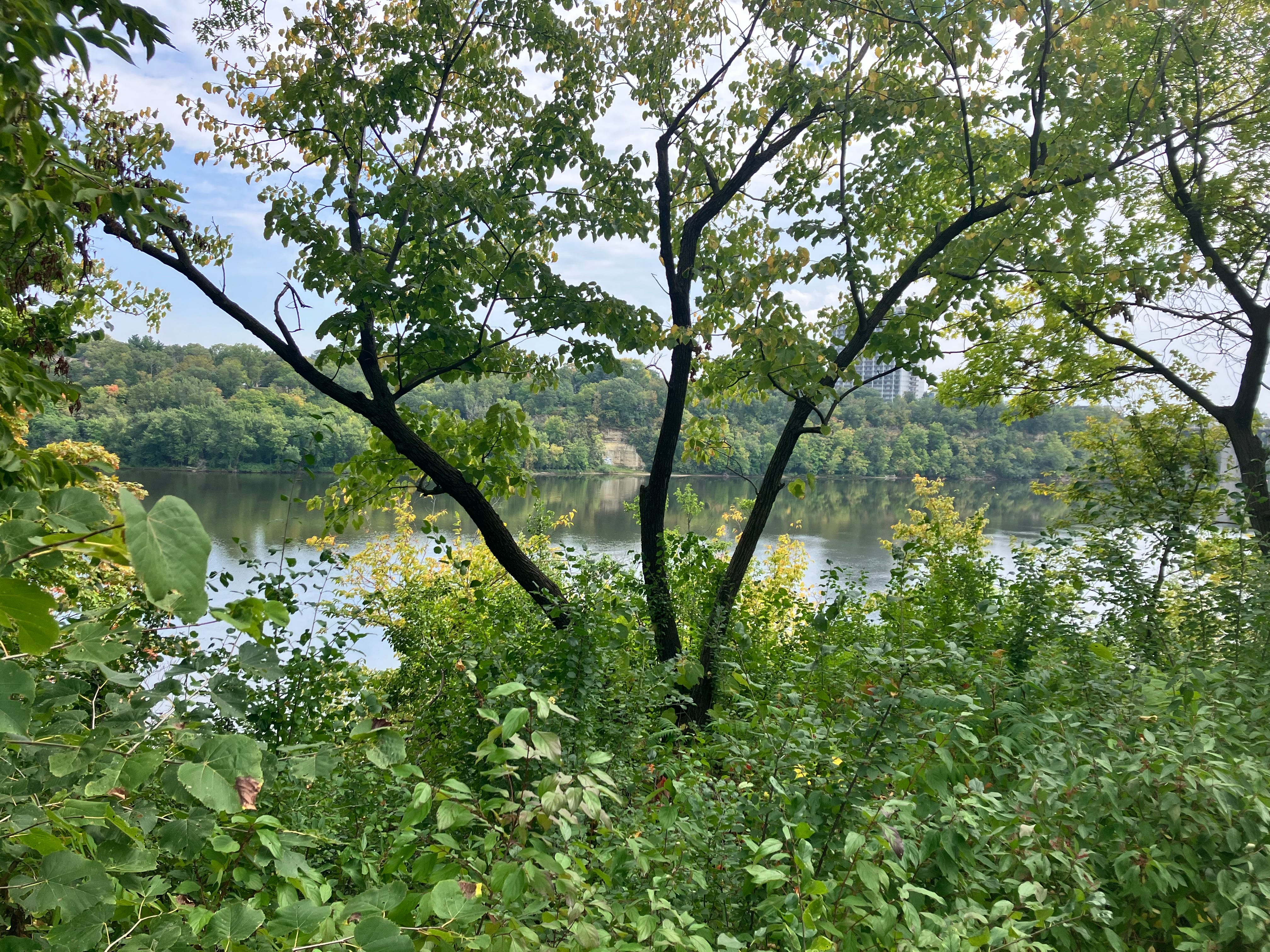
I felt as though I’d walked alongside three different rivers — each part felt so unique. Maybe some day I’ll walk the length of it, this mighty river that contains multitudes. The river may change but I don’t think I’ll lose my way.